
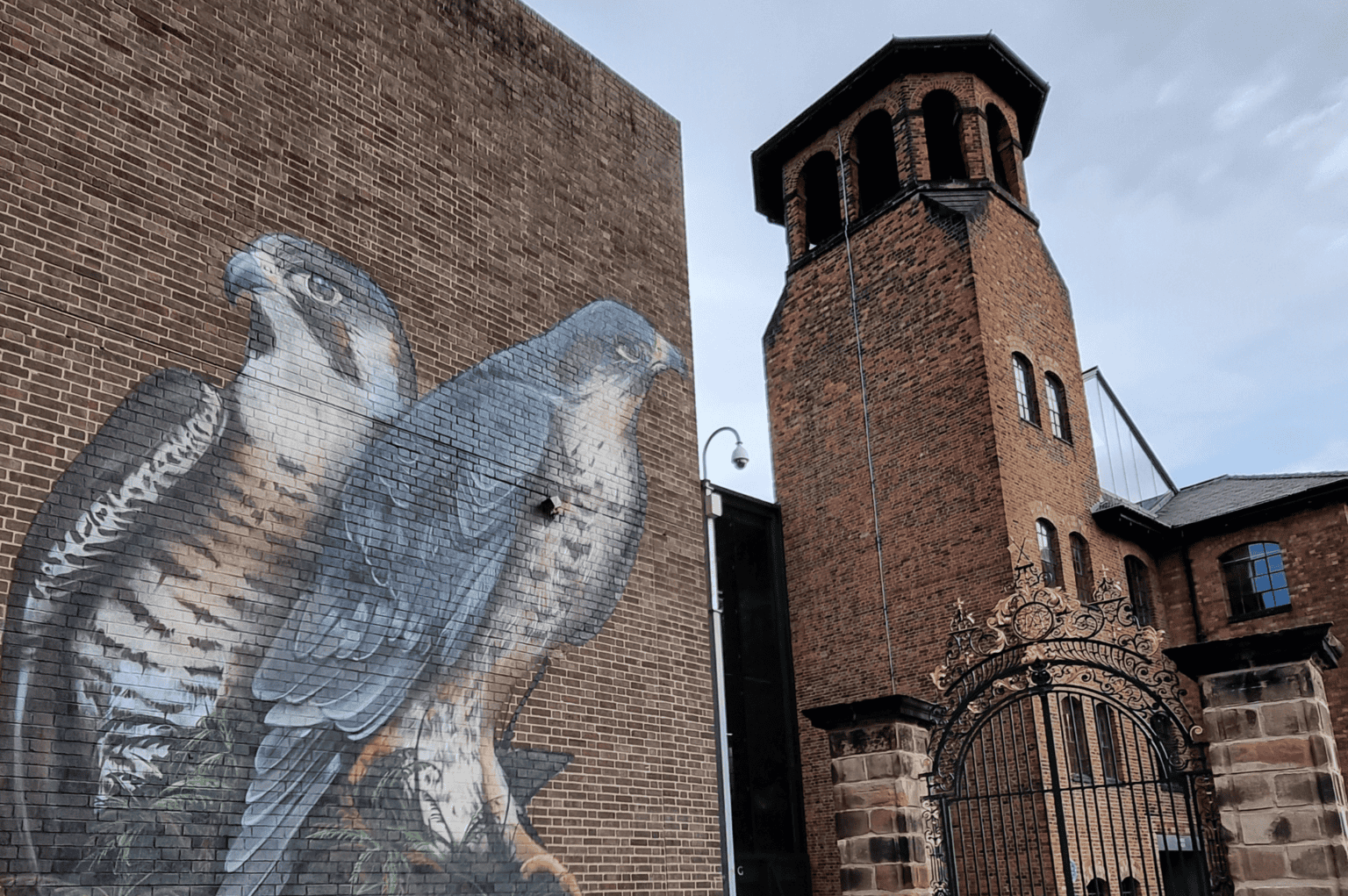
The United Nations Educational, Scientific and Cultural Organization (UNESCO) designated the Derwent Valley Mills as a World Heritage Site (DVMWHS) in 2001.
The World Heritage Site (WHS) runs from Matlock Bath in the North to the Silk Mill (the Museum of Making) in Derby city centre. It hugs the River Derwent that powered it’s mills in the late 18th and early 19th century. WHS status is the highest international heritage designation that can be bestowed, examples of other sites of such importance are the Pyramids, the Taj Mahal and the Great Wall of China.
Each WHS has to have a management plan that has to be adhered to in order to ensure the WHS does not become at risk. Examples of risk could be over development or environmental factors. A sustainable approach to development in the DVMWHS is possible to achieve through the careful development of sites along its route. One way this is managed is by following The International Council on Monuments and Sites (ICOMOS) Guidance on Heritage Impact Assessments for Cultural World Heritage Properties when making a planning application.
The ICOMOS Guidance (published in 2022) sets out an approach to judge the scale or severity of impacts or changes upon a WHS considering their direct and indirect effects and whether they are: temporary or permanent, reversible or irreversible. The cumulative effect of many changes has to be considered because one extension here or a development there all adds up to the overall status of a WHS to be put at risk. Think of Liverpool which had its WHS revoked because of new development along the waterfront as causing “serious deterioration and irreversible loss” of the area’s historic value.
It is important to remember that development is still possible within the WHS because its not the aim of designation to keep everything as it is but to ensure that development and change enhance its attributes. This has meant that recently each project Planning & Design Practice heritage team have worked on throughout the length of the DVMWHS adheres to this philosophy. Below are a few great examples within the Derwent Valley.
Developments within the Derwent Valley
Carrwood Mill


Planning permission was approved for Carrwood Mill (Peak UK Kayaking Co Ltd) which will bring textile production back into the DVMWHS at the derelict former Cromford Garden Centre. This was an important site to get right as it had possible impacts for nearly 300 nearby heritage assets. Working carefully with the ICOMOS guidance jointly with James Boon Architects we achieved a sensitive design for Peak Uk’s headquarters that will enhance a former derelict brownfield site and provide employment and leisure opportunities.
Burley House


After the Grade II Listed Georgian Burley House in Duffield planning permission was granted to sensitively extend and make internal changes, Burley House is now a landmark building as you enter Duffield from Allestree.
John Smedley’s 18th century cottages
John Smedley ltd has been producing textiles in a quiet corner of rural Derbyshire for the last 237 years. Originally established as a cotton mill, but a wool spinning mill for most of its history, John Smedley can claim to be the oldest continuously manufacturing factory in the world, and is the last surviving working textile mill in the Derwent Valley Mills World Heritage Site.
Faced with aging buildings and increased competition, the company needed a way to keep it’s history alive. A number of Grade II Listed cottages on the site provided the opportunity, and have now been saved by the company from a state of substantial disrepair after we achieved the necessary planning permission.
Our Heritage Services
At Planning & Design we recognise the importance of the built heritage in our towns, villages and rural areas.
We have an in-house team of consultants, conservation architects and architectural technicians who ensure that proposals are designed sympathetically to conserve and enhance historic buildings and sites.
We have worked on numerous schemes affecting Listed Buildings, Conservation Areas and the Derwent Valley Mills World Heritage Site. We have the expertise and specialist knowledge to achieve success with your project regardless of its size.
Thinking of buying a Listed Building or a home within the Derwent Valley Mills World Heritage Site?
For a free, no-obligation consultation to discuss your project or property, please don’t hesitate to email us at enquiries@planningdesign.co.uk or give us a call on 01332 347371.