
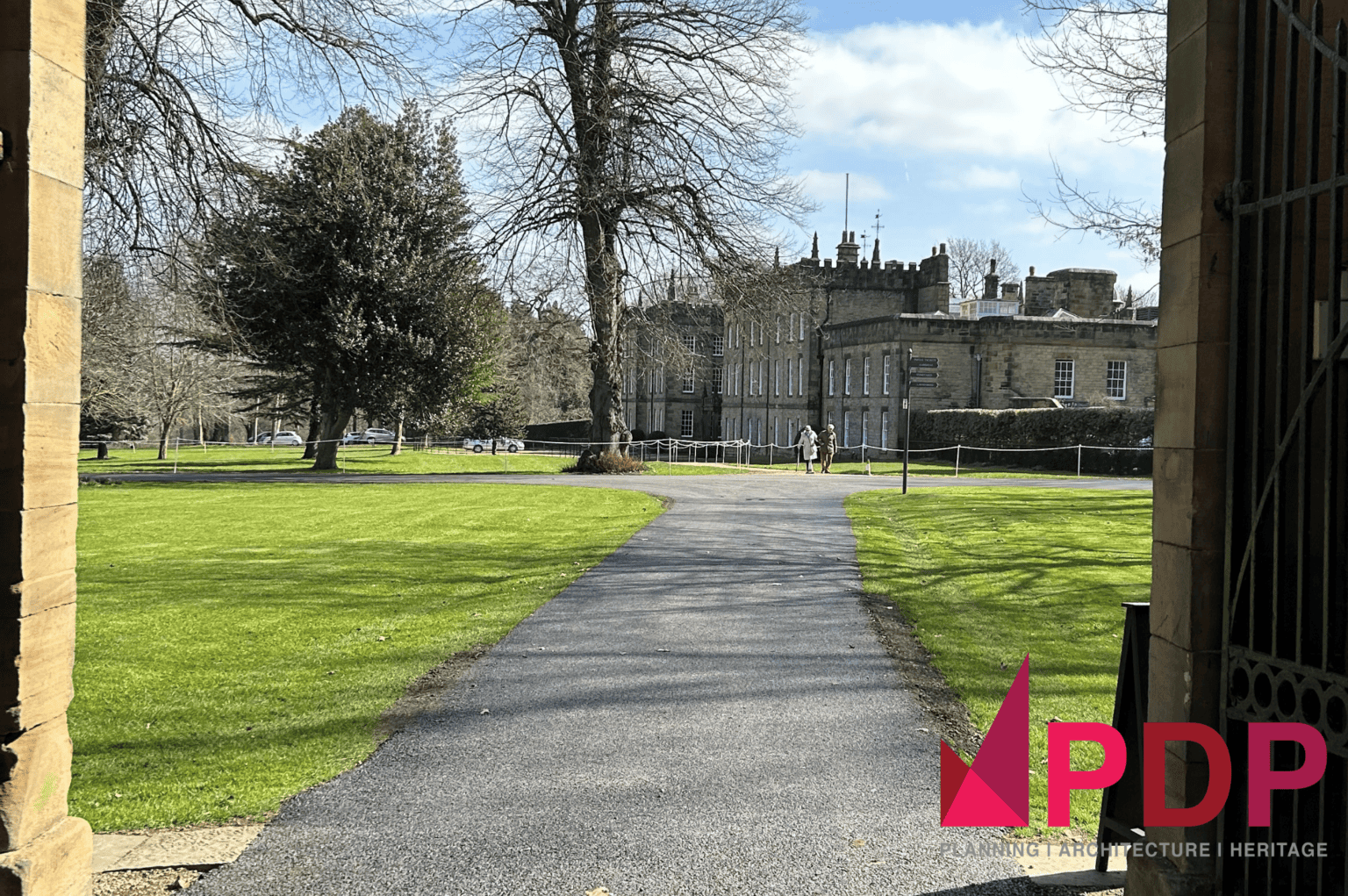
Derbyshire and the surrounding Peak District are home to numerous rural estates, many of which are historic properties associated with the English nobility. Significant rural estates that Planning & Design Practice have worked with include: Chatsworth Devonshire Group, Renishaw Estate, Vernon Estate and Cannon Hall Estate. These estates, among others, have played significant roles in our local history and contribute much to its rich cultural and agricultural landscape.
Repurposing buildings on historic rural estates involves several important heritage considerations to ensure that the project is sensitive to the property’s historical and cultural significance.
Here are some key considerations for Rural Estates:
Listed Building Status: Many historic buildings on estates are likely to be listed or designated as having special architectural or historical significance. In these cases, any alterations or repurposing will require careful attention to conservation guidelines. These buildings are often subject to stricter controls on changes to their structure, features, and materials.
Conservation Areas: If the estate is located within a conservation area, planning restrictions may apply. These areas are designated to protect the character and appearance of the area, so any development or changes must preserve the area’s aesthetic value.
Heritage Impact Assessment: A formal heritage impact assessment may be required to evaluate the effect of the proposed changes on the building’s historical integrity and the wider estate. This assessment helps balance the preservation of the estate’s history with new uses.
Change of Use: Repurposing historic buildings on rural estates often involves changing their use. For example, converting a barn into a residential property or a cultural venue may require a “change of use” application. Local planning authorities will assess how the proposed use impacts the surrounding environment and whether it aligns with local development plans.
Minimising Impact on Historic Features: Any changes or additions to the building should be done in a way that minimises disruption to the original character and features. This may involve using sensitive materials, restoring original elements, and integrating modern systems in ways that are discreet and reversible.
Adaptive Reuse Solutions: The goal of repurposing is to make buildings functional for modern needs without compromising their historical value. Creative adaptive reuse solutions are essential to ensuring that the building can serve a new purpose while maintaining its historic appeal.
Repurposing historic buildings on rural estates is a rewarding but complex process that requires careful planning and attention to a variety of factors, from legal and regulatory requirements to environmental and community impacts. By balancing preservation with innovation, it is possible to revitalise these buildings and integrate them into modern society while honouring their historical value.
At Planning & Design Practice we recognise the importance of the built heritage in our towns, villages and rural areas. We have an in-house team of consultants, conservation architects and architectural technicians who ensure that proposals are designed sympathetically to conserve and enhance historic buildings and sites.
We have worked on numerous schemes affecting Listed Buildings, Conservation Areas and the Derwent Valley Mills World Heritage Site. We have the expertise and specialist knowledge to achieve success with your project regardless of its size.
For a free, no-obligation consultation to discuss your project or property, please don’t hesitate to email us at enquiries@planningdesign.co.uk or give us a call on 01332 347371.

