
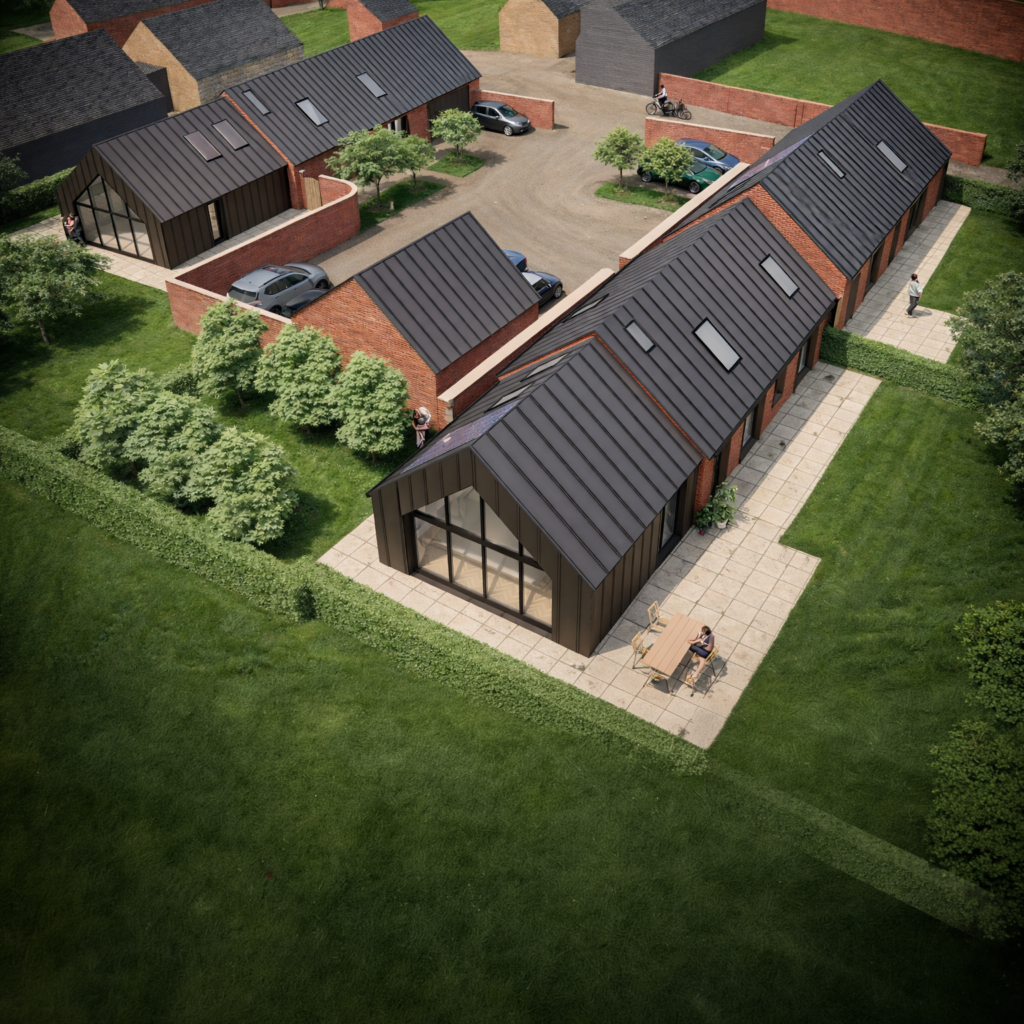
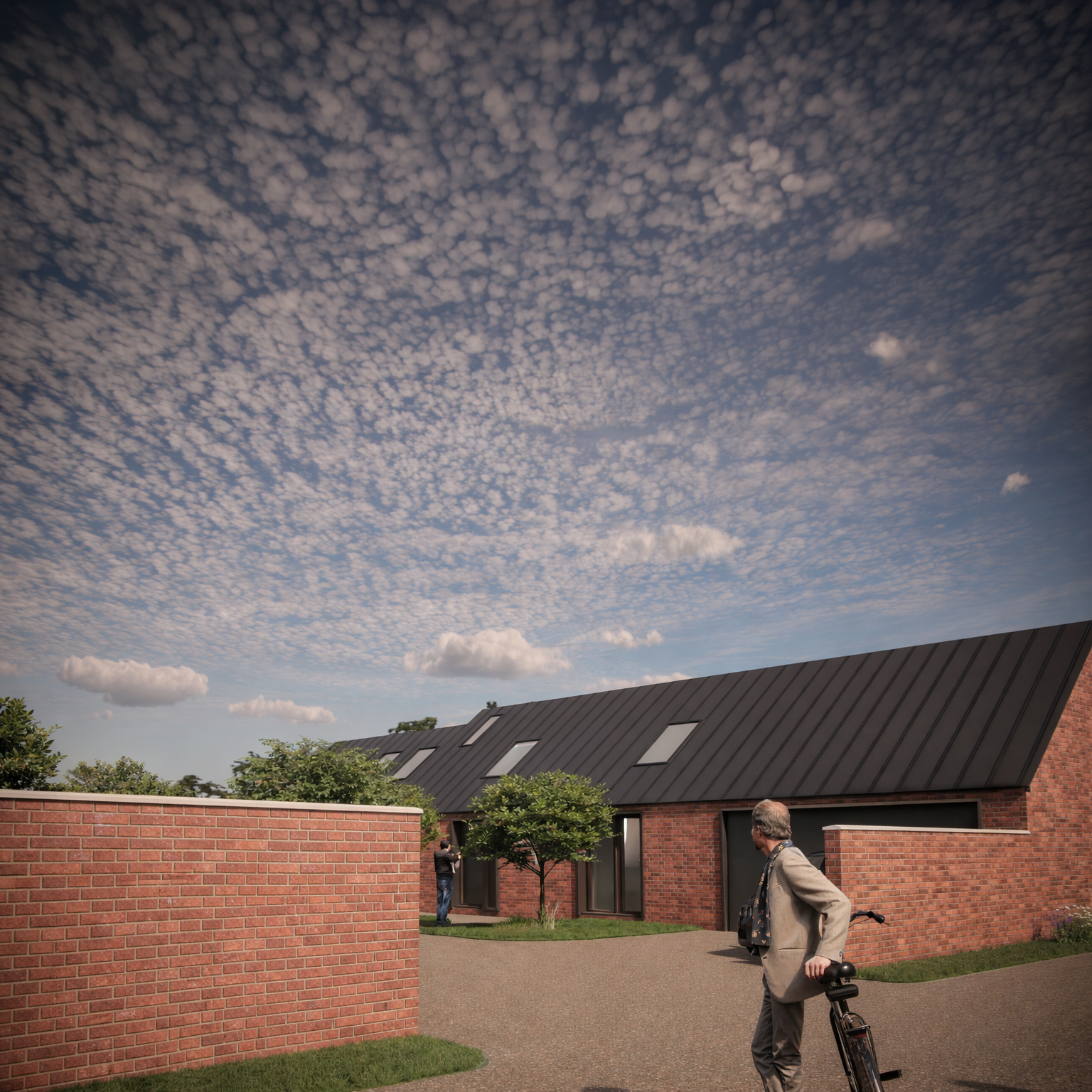
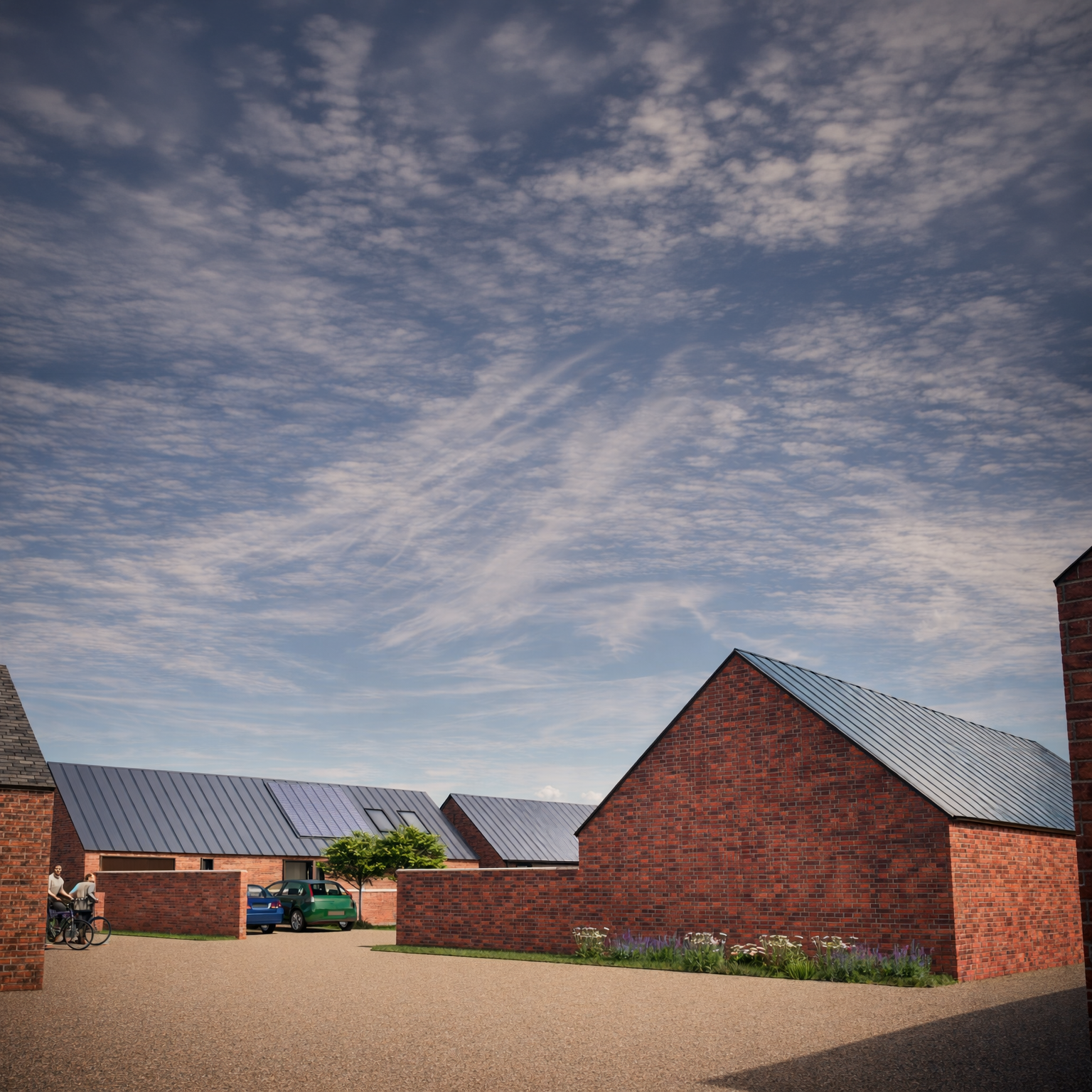
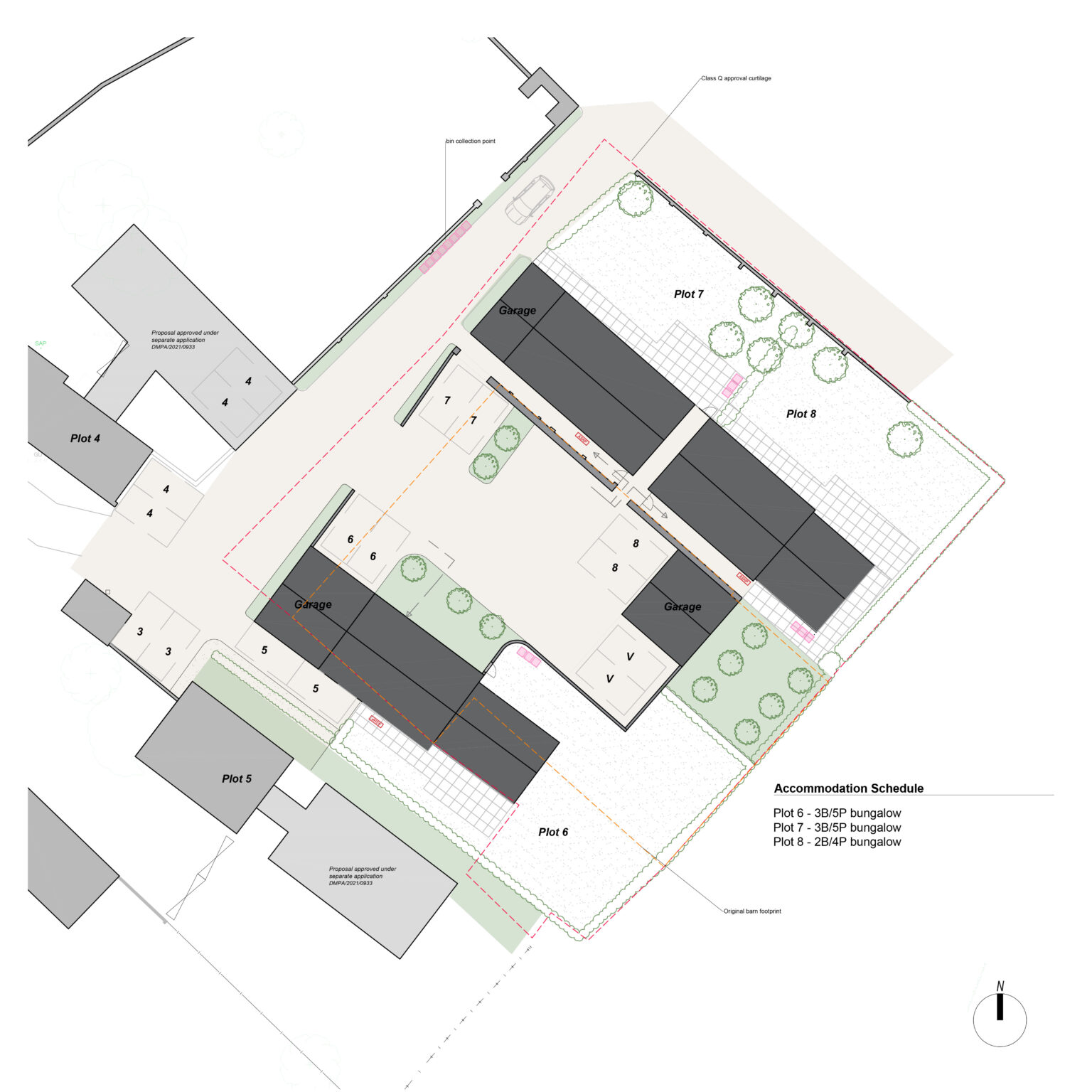
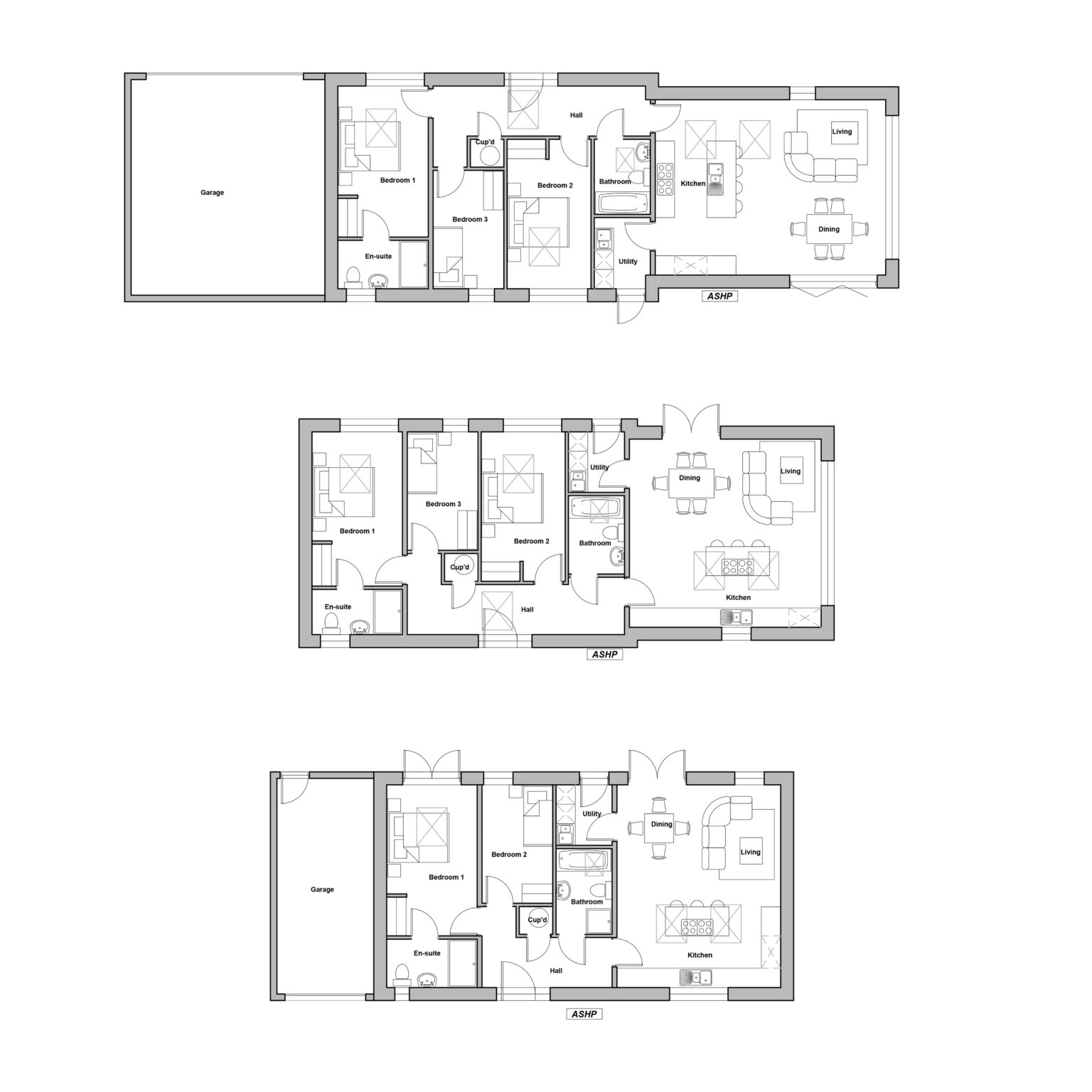
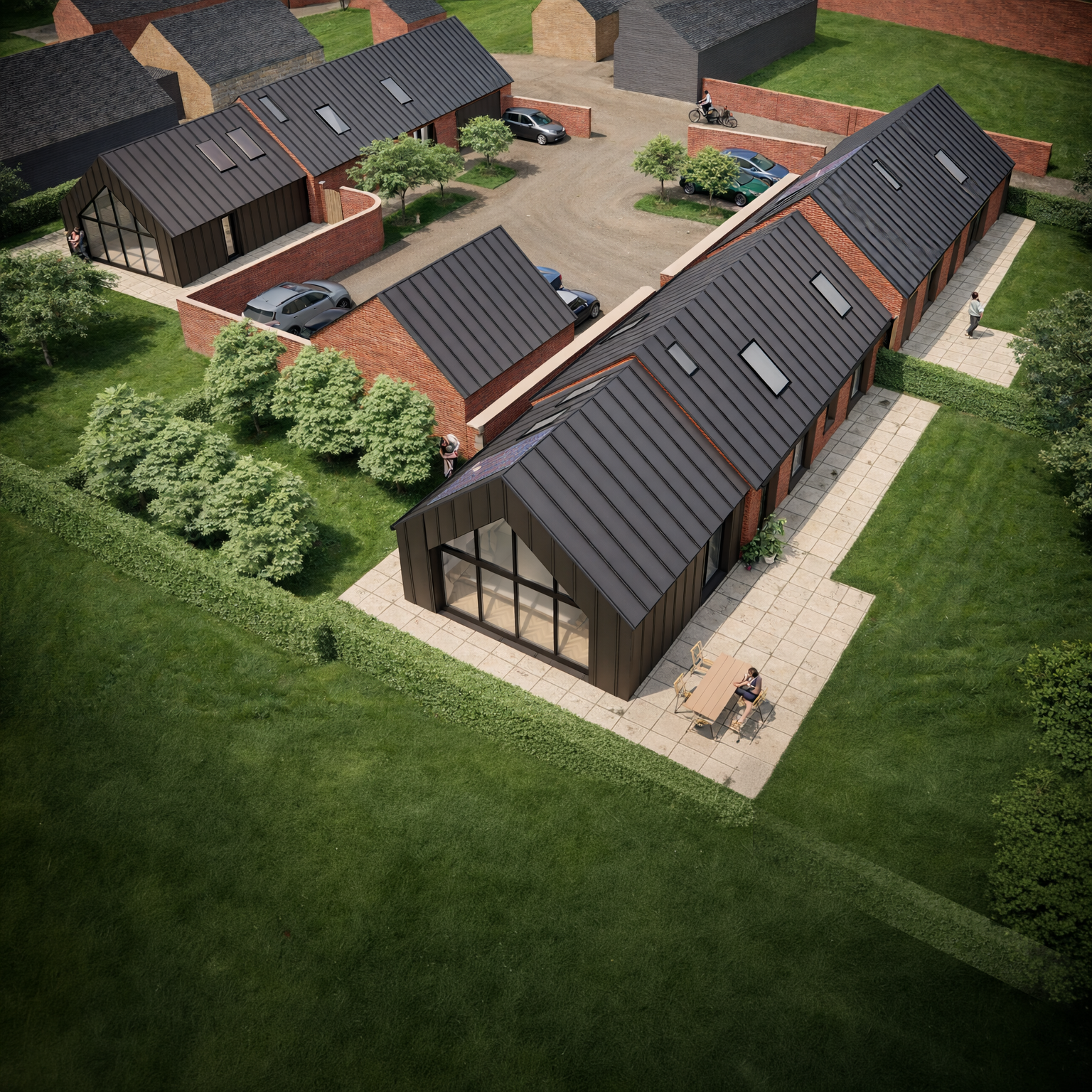
This project involves the resubmission of a refined residential scheme at a historic rural farmstead in Twyford. The site benefits from both full planning permission for the conversion of several Grade II listed barns and Class Q approval for the conversion of two modern agricultural sheds into four large dwellings.
The site sits within the Twyford Conservation Area and includes a collection of Grade II listed outbuildings associated with Twyford Hall, alongside modern agricultural sheds previously assessed as suitable for Class Q residential conversion.
The design process was shaped by heritage evidence, previous application feedback, and a comparison against fallback scenarios. The reinstatement of a courtyard arrangement responds directly to the farmstead’s historic form. This resolves earlier concerns about massing, spatial legibility and heritage character raised during the previous application cycle.Once the updated masterplan was established, the next key step was developing a deeply contextual set of building styles to fit within the site context. The original outline application set out some key design criteria in relation to the specific character areas of the plot; Settlement Fringe, Farmhouse and Barn typologies. At the reserved matters stage our key task was overlaying the client’s design aspirations for the size, style and types of houses for the site with the influence of the character areas. We created several massing typologies to suit each character area, simple gable farmhouses, low-lying barns and more detailed settlement fringe houses – before then adapting these shapes to the unit sizes required – 2 bed, 3 bed, 4 bed and 5 bed. Alongside the massing and form of the buildings we also developed the external materials used, including brickwork and tile roofs, carefully proportioned windows, and considered brick detailing. All of this came together to create a rich and varied set of houses that formed a cohesive street scene and avoided any appearance of repetition.
This resubmitted scheme demonstrates how a heritage-led design approach, supported by robust analysis of fallback options, can unlock a high-quality redevelopment in a sensitive rural setting.
For more information, and to arrange a no obligation consultation to discuss your project, please contact us on 01332 347371.