
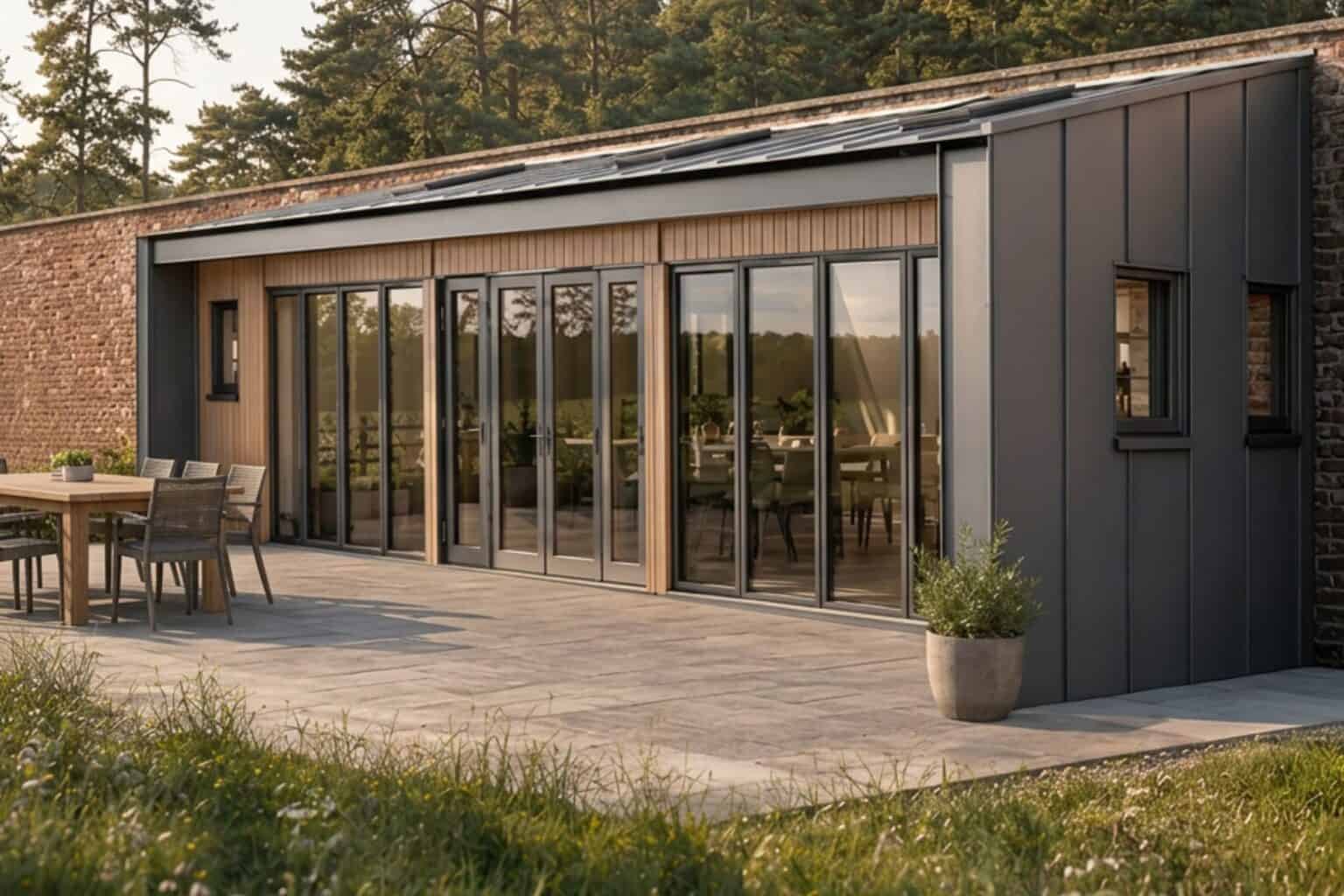
Planning permission has been granted to convert a traditional brick barn near Bretby, close to Burton-on-Trent, into a single home.
The approved scheme will bring a disused rural building back into use as a four-bedroom dwelling, with a new extension providing open-plan living space. Because the barn is a non-designated heritage asset within a historic parkland setting, the proposal needed to show that the conversion would protect the building’s character while securing its long-term future.
For Planning & Design Practice, the project was as much about heritage and ecology as it was about design. The planning case had to set out why a residential use was the right future for the building, how its appearance would be retained, and how protected species and biodiversity would be properly addressed.
Reusing a traditional building in a sensitive setting
The barn is a good example of a traditional red brick agricultural building. It was originally associated with a country estate and built against the wall of a walled garden, where it played a part in the upkeep of a vinery and glasshouse that once stood nearby.
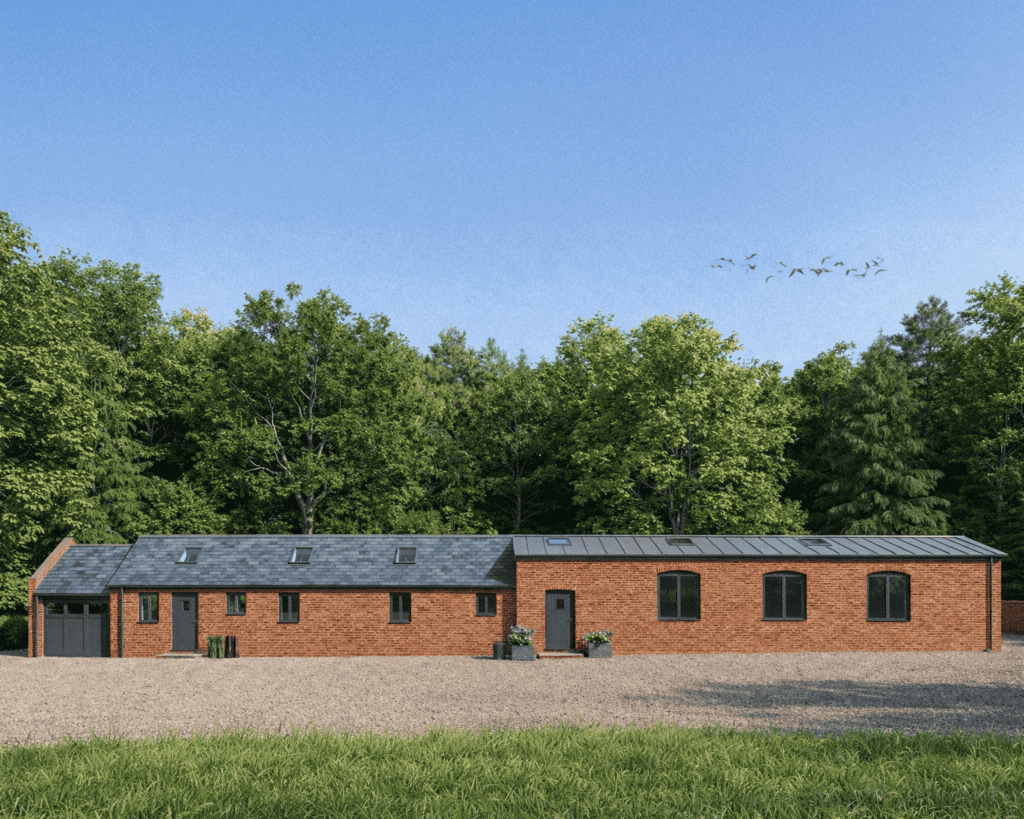
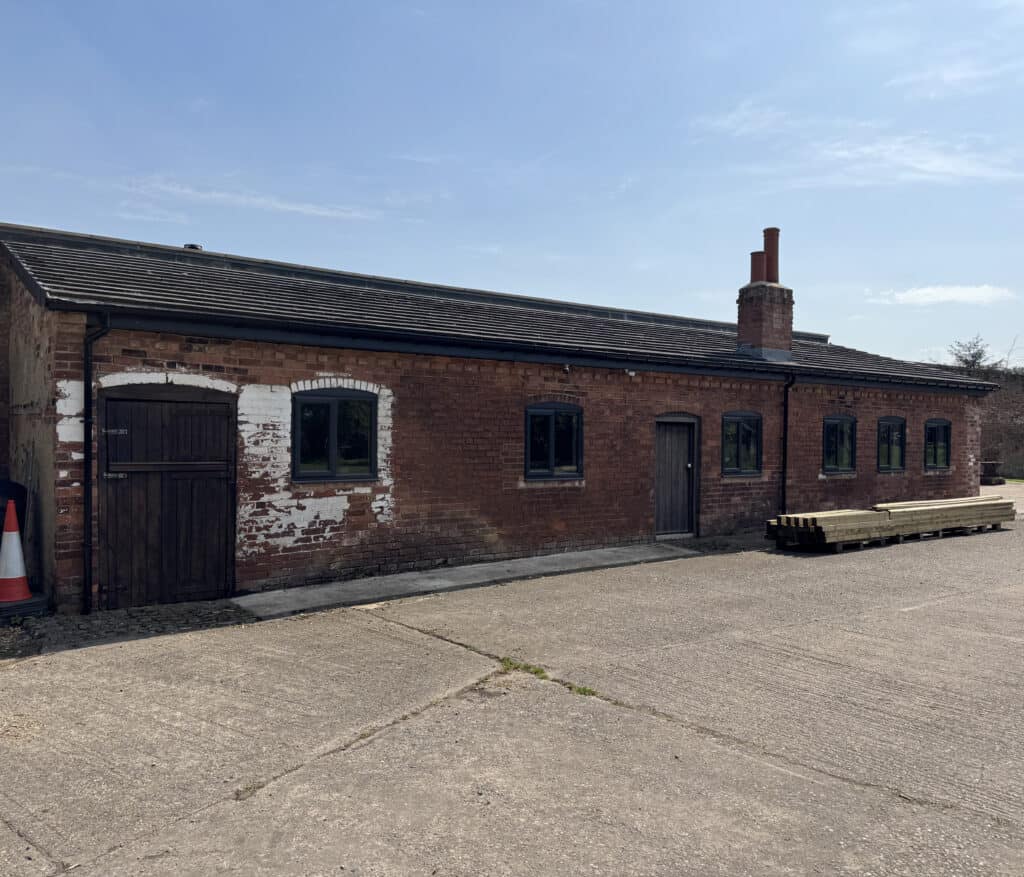
Although it is not a listed building, the barn sits within a registered historic park and gardens and within the setting of a nearby Grade II* listed hall and a scheduled monument. That heritage context was central to the application. The submitted Heritage Impact Assessment set out the significance of the building and its surroundings before considering how the proposed works would affect them.
The principle of converting the building had already been established over several years, with the barn having been granted approval for residential conversion more than once in the past. Securing an active, long-term use was an important part of the argument, because a well-maintained home is far more likely to preserve the building than leaving it disused.
A design that balances old and new
The design keeps what matters most about the barn. The red brick walls, which give the building much of its historic character and tie it to the surrounding walled garden, are retained and restored. Careful repairs to the roof and walls were proposed to protect the architectural character of the building.
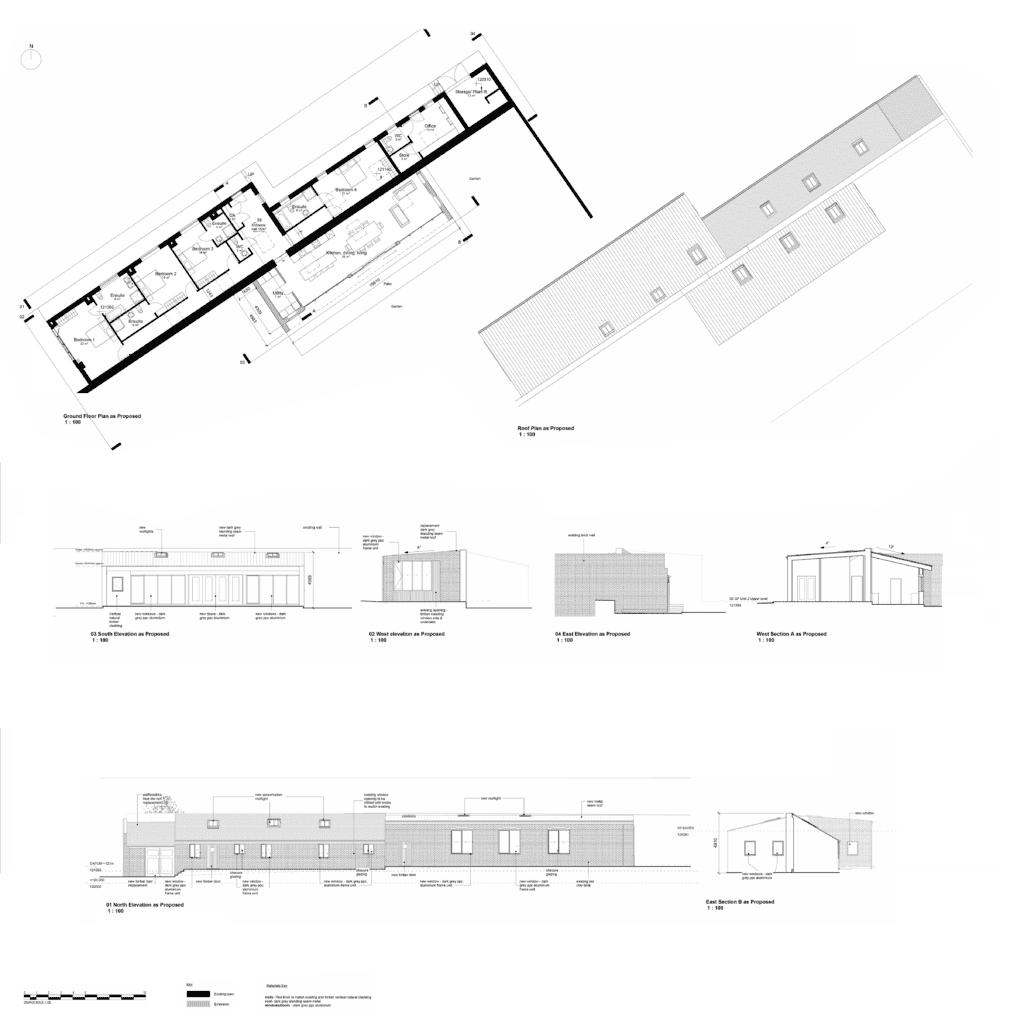
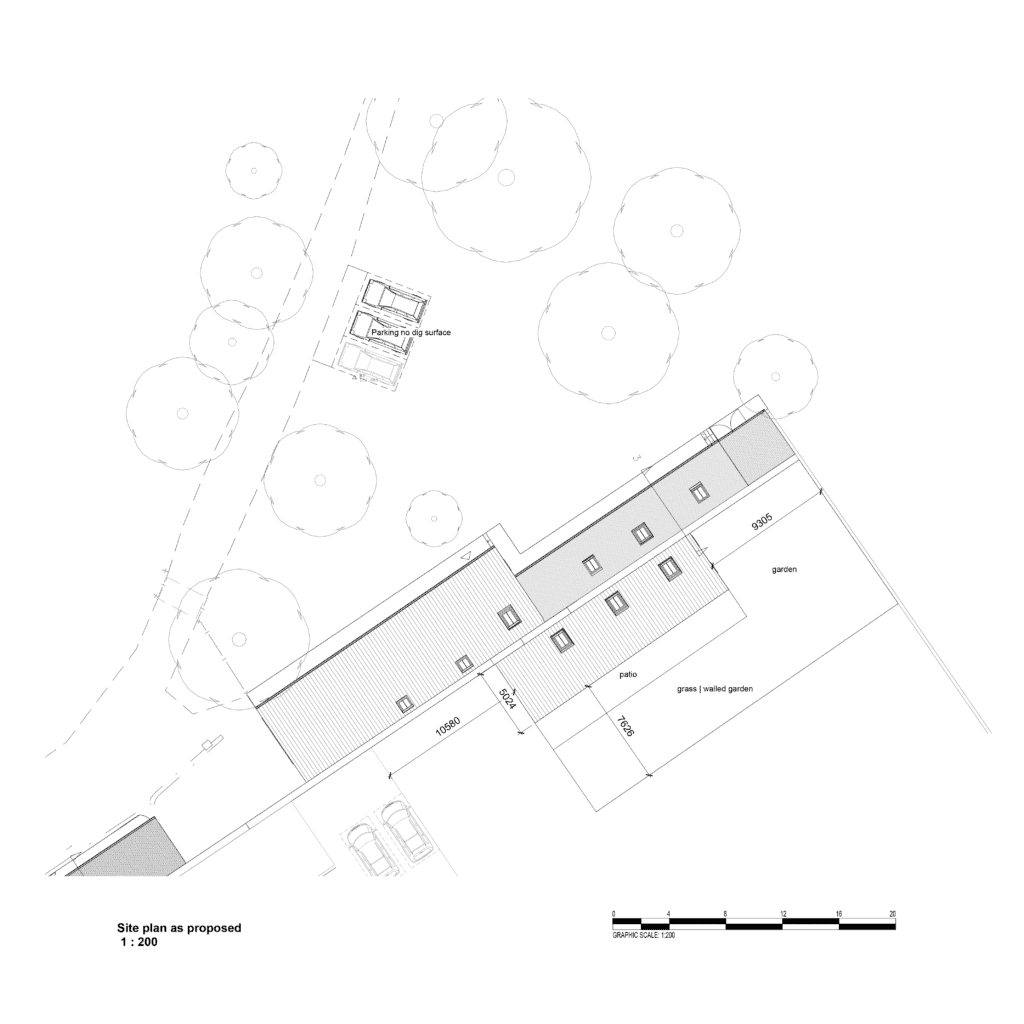
Inside, the retained barn provides four ensuite double bedrooms, an entrance hall and a separately accessed office, storage and plant room. A new extension off the south-eastern elevation provides the open-plan kitchen, living and dining space, finished with vertical natural timber cladding and dark grey aluminium windows and doors opening onto the garden.
Rather than copying the traditional barn, the extension is designed as a clear, modern contrast. This approach reinstates a historic glazed extension that once stood on the same elevation, shown on a map dating back to 1883, while keeping the original barn legible. The extension is tucked into the corner of the walled garden, where it sits largely out of sight. A new dark grey standing seam metal roof matches the neighbouring converted barn, helping the buildings read together.
Our heritage planning specialists prepared the heritage case, which concluded that the works would cause less than substantial harm to the historic park and gardens. That limited harm is outweighed by the public benefit of securing the building’s optimum viable use and ensuring it is cared for over the long term.
Protecting wildlife and improving biodiversity
Rural conversions often involve buildings that are valuable to wildlife, and this barn was no exception.
Survey work identified that the building had high potential for roosting bats, and dusk emergence surveys found a common pipistrelle roosting there. As a result, a European Protected Species licence from Natural England must be in place before works begin, and a lighting strategy will be agreed to protect bats and other nocturnal wildlife.
The scheme also secures a range of biodiversity enhancements, including a swift brick, a bat box, a bee brick and gaps in fencing to keep routes open for hedgehogs. Overall, the submitted assessment identified a biodiversity net gain of around 11%, and a Biodiversity Gain Plan must be approved before development starts. This is the kind of practical, evidence-led work that sits alongside our rural development experience.
A practical approval for a rural home
South Derbyshire District Council granted full planning permission on 11 June 2026, subject to conditions.
As well as the ecology and biodiversity requirements, the conditions cover matters such as matching external materials, tree protection, a contaminated land assessment, parking provision and water efficiency. The site sits in Flood Zone 1, where the risk of flooding is low, and existing access serves the property, with three parking spaces provided.
For owners of barns, outbuildings and other rural buildings, the decision is a useful reminder that conversion is often possible, but rarely automatic. Heritage character, design quality, protected species and biodiversity all need to be understood early and presented clearly for a proposal to succeed.
How Planning and Design Practice can help
Planning and Design Practice is a multi disciplinary team of chartered town planners, architects, architectural assistants and heritage specialists. We support rural development, barn conversion and homeowner projects from early strategy through to submission and decision, keeping proposals clear, proportionate and deliverable.
Our heritage and planning services can help with change of use applications, conversions of traditional and historic buildings, and development within sensitive countryside and parkland settings.
For a free, no obligation consultation, contact Planning and Design Practice on 01332 347371 or enquiries@planningdesign.co.uk.