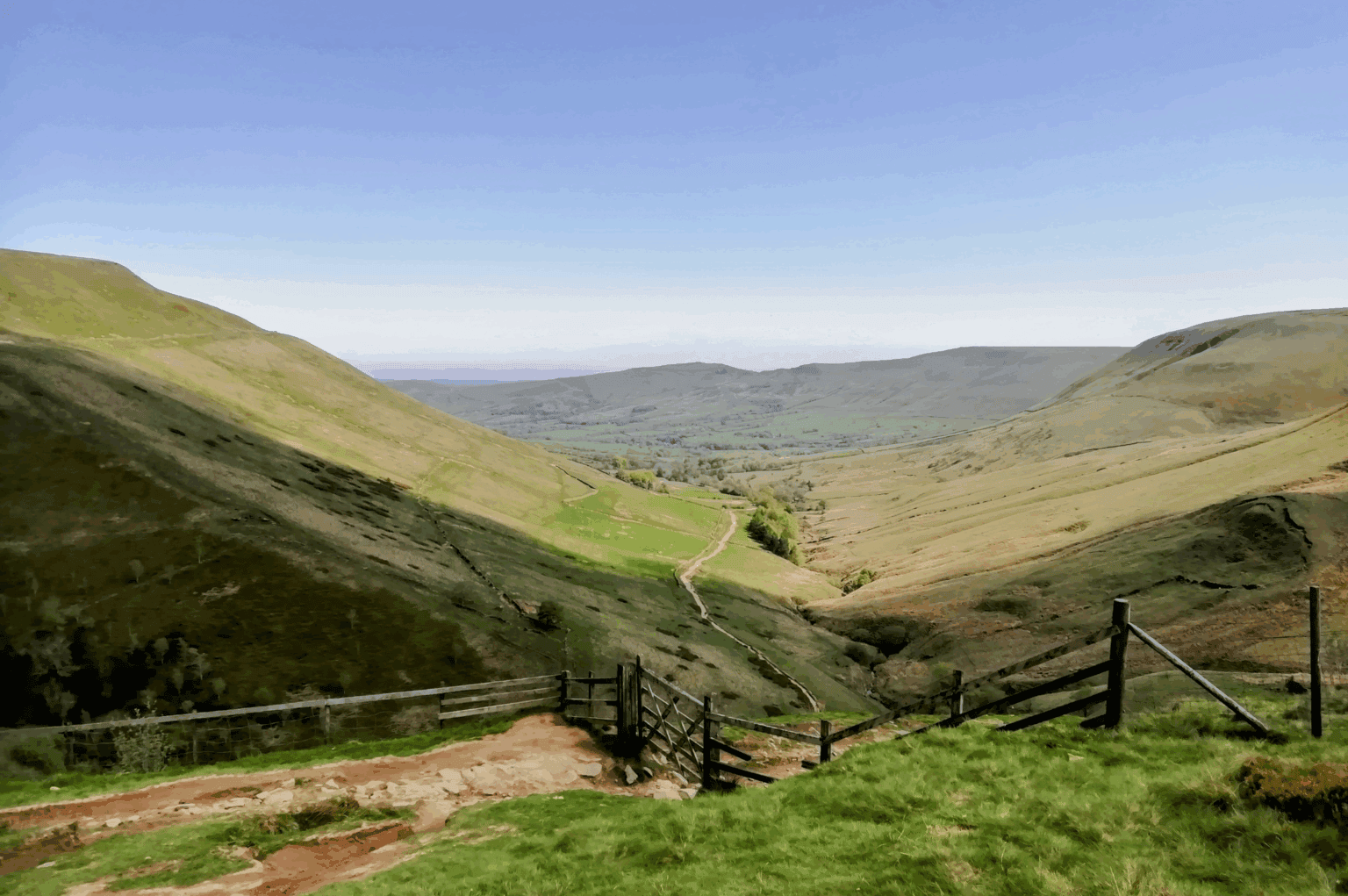
Boasting over 2000 listed buildings, and a character shaped by non-designated heritage assets the Peak District National Park enjoys a unique identity. Our Heritage Consultant Ruth Matthews looks at the planning policies that help protect this heritage in the face of evolving agricultural practices.
It’s quite remarkable to learn that less than 5% of cultural heritage features in the Peak District National Park (PDNP) have any kind of legal protection or designation? Yet, the remaining 95% of non-designated heritage assets still play a vital role in shaping the Park’s unique identity and character. From dry-stone walls to historic field patterns, these features are protected through planning policies and are deeply valued by local communities.1
The heritage of the Peak District isn’t preserved by policy alone—it’s a shared responsibility by farmers, landowners, residents, local businesses, and organisations who care for the land. Their collective effort helps keep the Park’s cultural fabric alive and thriving. 74% of the National Park has been surveyed for archaeology, and the entire landscape has been analysed through Historic Landscape Characterisation (HLC). “Understanding the historic landscape is critical for understanding why our present-day landscapes look like they do.”
All HLC data and reports are publicly accessible through the Archaeology Data Service—a great resource for anyone curious about the Park’s story.2
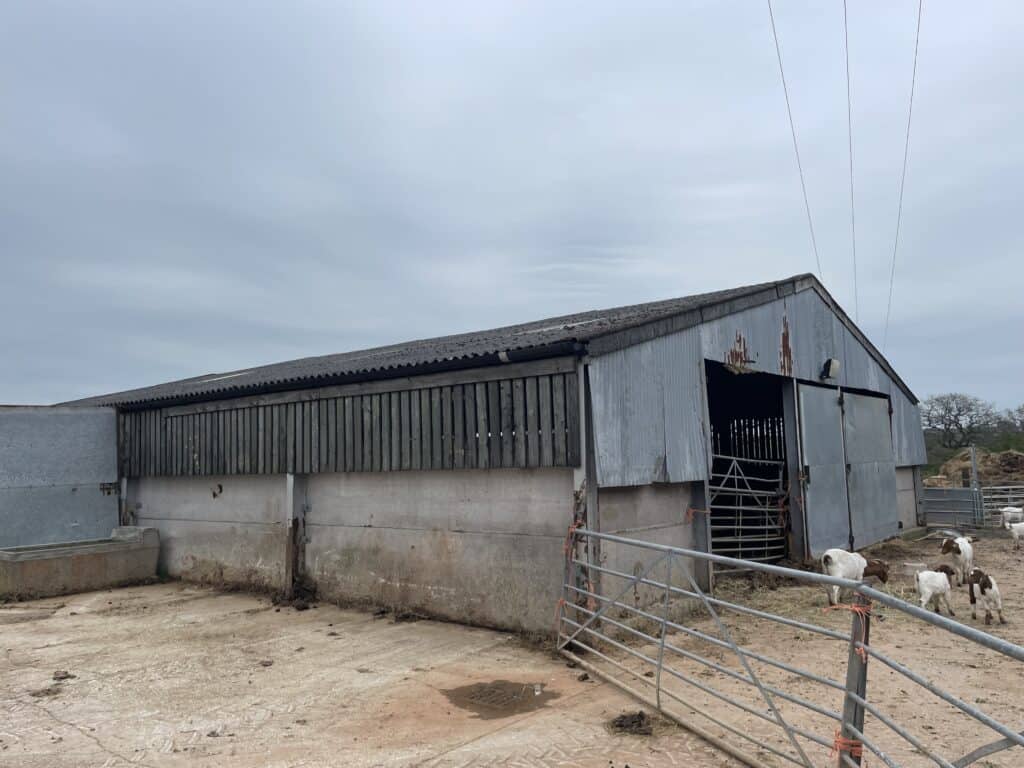
The PDNP is home to more than 2,000 listed buildings, many of which are historic farmhouses, barns, and outbuildings. These structures showcase traditional materials and techniques and play a key role in rural tourism. However, some are at risk due to neglect or environmental wear.
While heritage listing protects these buildings, it also creates real challenges for farmers. Changes like installing modern equipment, converting barns, or upgrading safety features often require special permissions this can be costly and time-consuming. Between 2009 and 2016, the number of commercial dairy farms in the PDNP dropped by 35%—a reflection, in part, of the challenges farmers face in balancing conservation with operational needs. The total farmed area in the Park has remained stable, but the number of farm holdings has decreased by nearly 200 over the past decade. As agriculture evolves, so must our approach to heritage management. How do we protect what makes the Peak District special without hindering the viability of its farming communities?
In examining the heritage of the Peak District, one significant issue is the conflict caused by trying to retain the beauty of the national park and allowing a farm to thrive and adapt. It is easy to understand the frustrations that farmers must feel especially as some families have farmed the land for generations and have made improvements to buildings unhindered during all this time. Yet since the mid C20 the combination of listing and National park status has meant that even the smallest change is subject to planning restrictions and failure to adhere to the rules can lead to prosecution. The dominant narratives, which present heritage as inherently positive, tend to obscure these competing agendas.
The fact that development has been restricted in the Peak Park does mean it is a place of national beauty for all to enjoy however, one must remember it is a working, living landscape. Indeed it is not a rural museum-piece which is fixed and static. In order to preserve this heritage, it must be fully integrated into the modern life of the community in such a way as to retain local practices and ways of life. Redundant buildings should be readapted and re-used, in particular to exploit the economic potential. And where necessary new agricultural buildings of quality must be allowed in appropriate locations.
The Peak District and beyond – Our Heritage Service
Planning & Design Practice have over 20 years experience in dealing with planning applications within the Peak Park and have assisted many homeowners, landowners and businesses with navigating the planning system in one of England’s most sensitive landscapes.
Our RTPI Chartered Town Planners and RIBA accredited Architects understand the challenges and opportunities that come with farm masterplanning and farm diversification, and the processes involved in creating residential spaces from agricultural buildings.
Rural development can bring about significant gains and help to transform and maximise the value of your rural property. However, development in the countryside is subject to strict planning controls which can make obtaining planning permission very difficult.
For more information, and to discuss your own project or property please contact us on 01332 347371 or email enquiries@planningdesign.co.uk
Peak District Heritage: Protecting the Past, Facing the Future| Sources
1: https://reports.peakdistrict.gov.uk/
2: https://reports.peakdistrict.gov.uk/sotpr/docs/people-&-farming/cultural-heritage.html#fn2