
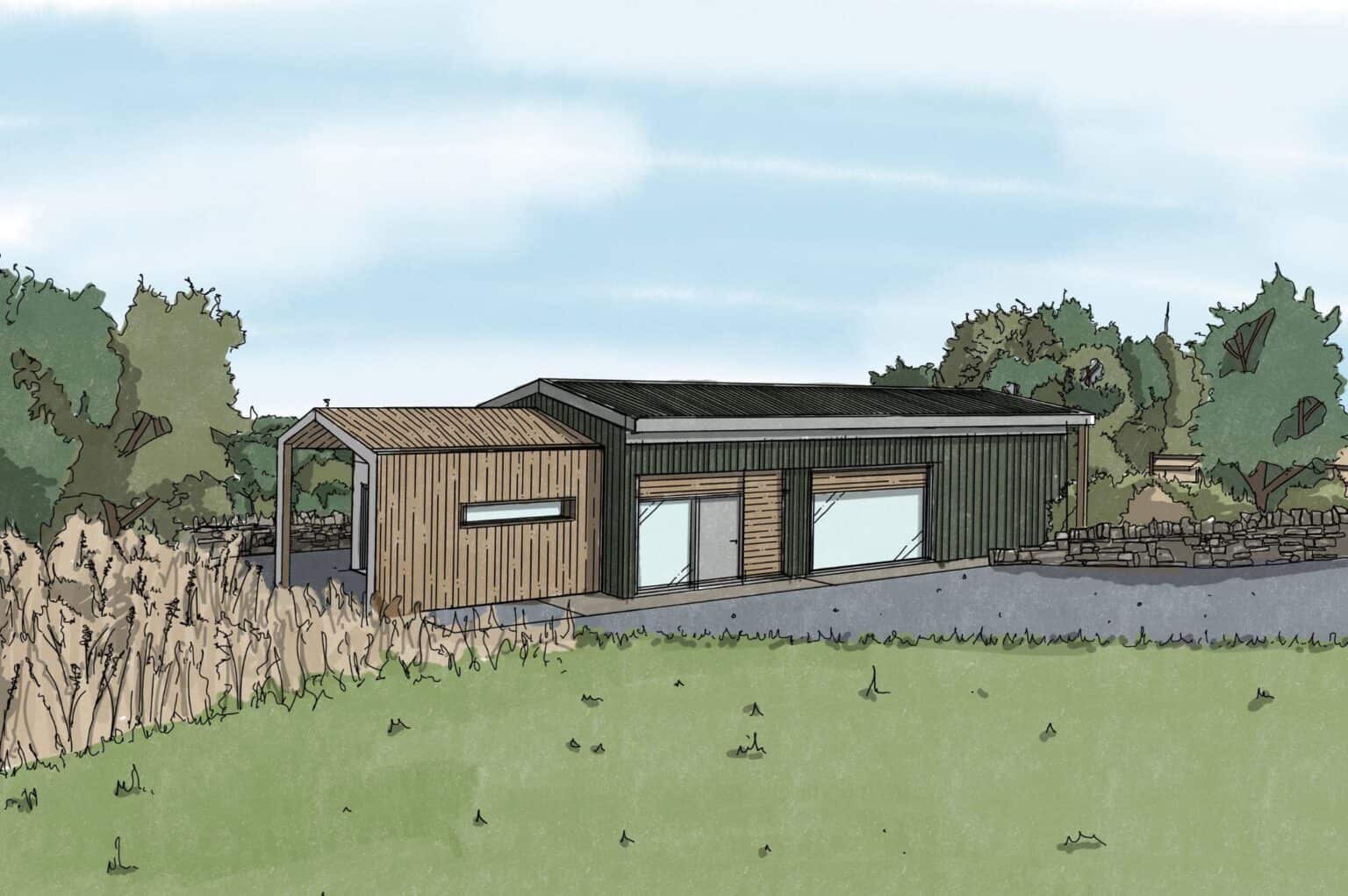
Securing planning permission for new housing in the countryside is often complex and is generally more difficult that within existing settlements. Both the National Planning Policy Framework and Local planning authorities place significant weight on sustainability and access to services and facilities which means policies are written to restrict rural housing. One of the key factors in limiting rural housing is protecting landscape character, safeguarding agricultural land, and ensuring proposals are both sustainable and justified. Whilst demand for rural housing is high, it is worth understanding what is possible before you embark on a project.
Below we set out the principal routes to securing consent for rural housing.
1: Full Planning Permission
Full planning permission provides detailed approval for a specific scheme, covering design, layout, access, and landscaping. It is the most commonly used route for rural housing and encompasses several distinct categories:
Rural Workers’ Dwellings
Applications for rural workers’ dwellings seek to justify new homes for those employed in agriculture, forestry, or other rural enterprises. Local authorities will expect robust evidence to demonstrate:
- A functional need for a worker to live at or near the place of work.
- That the enterprise is established, viable, and sustainable.
- That there are no suitable existing dwellings available locally.
Where approved, these dwellings are often subject to agricultural occupancy conditions, restricting occupation to those employed in the enterprise and ensuring the home remains tied to its rural purpose. These are generally granted on a temporary basis initially to allow the enterprise to establish and demonstrate profitability and viability.


Paragraph 80 (Outstanding Design) Dwellings
Paragraph 80 of the National Planning Policy Framework (NPPF) allows new isolated homes in the countryside in very limited circumstances, where they are of exceptional quality or innovative design. To succeed, proposals must:
- Be truly outstanding, achieving the highest standards of architectural quality.
- Be sensitive to the characteristics of the local area, reinforcing and enhancing the rural setting.
- Make a positive contribution to the landscape, often through innovative design solutions and environmental performance.
These applications are rare and subject to independent appraisal of the quality of design, but they provide opportunities for exemplar projects that combine design excellence with rural sensitivity.
Replacement Dwellings
Full applications may also be submitted to replace an existing dwelling with a new build. Authorities typically support replacement homes provided the new dwelling does not represent disproportionate enlargement, and its design is consistent with the character of the area.
Barn Conversions (Outside Permitted Development Rights)
Not all agricultural buildings qualify for conversion under permitted development rights. Where they do not, a full planning application is required. These must demonstrate that the building is structurally capable of conversion and that the design approach respects the agricultural character of the original structure.
2: Outline Planning Permission
Outline planning permission allows an applicant to establish the principle of residential development on a site without committing to all design details at the outset. Matters such as appearance, landscaping, layout, and access (known as the “reserved matters”) can be dealt with later. This route can be particularly useful for landowners or developers seeking clarity on the acceptability of residential use before investing in detailed design work. This approach is generally used for multiples of dwelling (2 or more) as it helps to secure the principle whilst reducing risk.
3: Permission in Principle (PiP)
Permission in Principle provides a streamlined route for smaller housing schemes, separating the principle of development from the technical details. The initial PiP stage considers location, land use, and scale, while the follow-on Technical Details Consent (TDC) stage addresses design and site-specific matters. For rural sites, PiP can be an effective way of testing the suitability of land for housing without incurring the full costs of a detailed application. PiP’s are not suitable for isolated homes in the countryside but work well within existing villages where the local plan supports new housing.
4: Prior Approval under Permitted Development Right
Certain rural housing projects can proceed under permitted development rights, subject to prior approval from the local authority. A key example is Class Q of the General Permitted Development Order (GPDO), which allows the conversion of qualifying agricultural buildings into dwellings. Something we have talked about in more detail here.
Prior approval applications are more limited in scope than full applications, with local authorities considering matters such as transport, noise, flood risk, and design. This route is particularly beneficial where redundant farm buildings can be sensitively repurposed for residential use.
5: Reserved Matters Applications
Where outline permission has been granted, a reserved matters application is required to finalise the details. This ensures that the design, landscaping, and layout are appropriate to the rural setting and comply with local policy requirements.
6: Heritage Consents
In addition to planning permission, rural housing proposals may sometimes require additional consents, such as listed building consent or conservation area consent. These apply where proposals affect heritage assets and require applicants to demonstrate a sensitive and well-considered design approach.
You can read more about Conservation and Listed Building consent here.
Rural Planning: Conclusion
Navigating the planning system for rural housing requires a clear understanding of the different application routes available. From agricultural workers’ dwellings justified on operational grounds, through to exceptional Paragraph 80 projects showcasing outstanding design, each route presents distinct opportunities and challenges.
By carefully selecting the most appropriate route and engaging early with a planning consultant and the local planning authority landowners and applicants can significantly enhance their prospects of securing consent for rural housing that is both policy compliant meets their specific needs.
Michael Bamford, Director- Chartered Town Planner, Planning & Design Practice Ltd
