
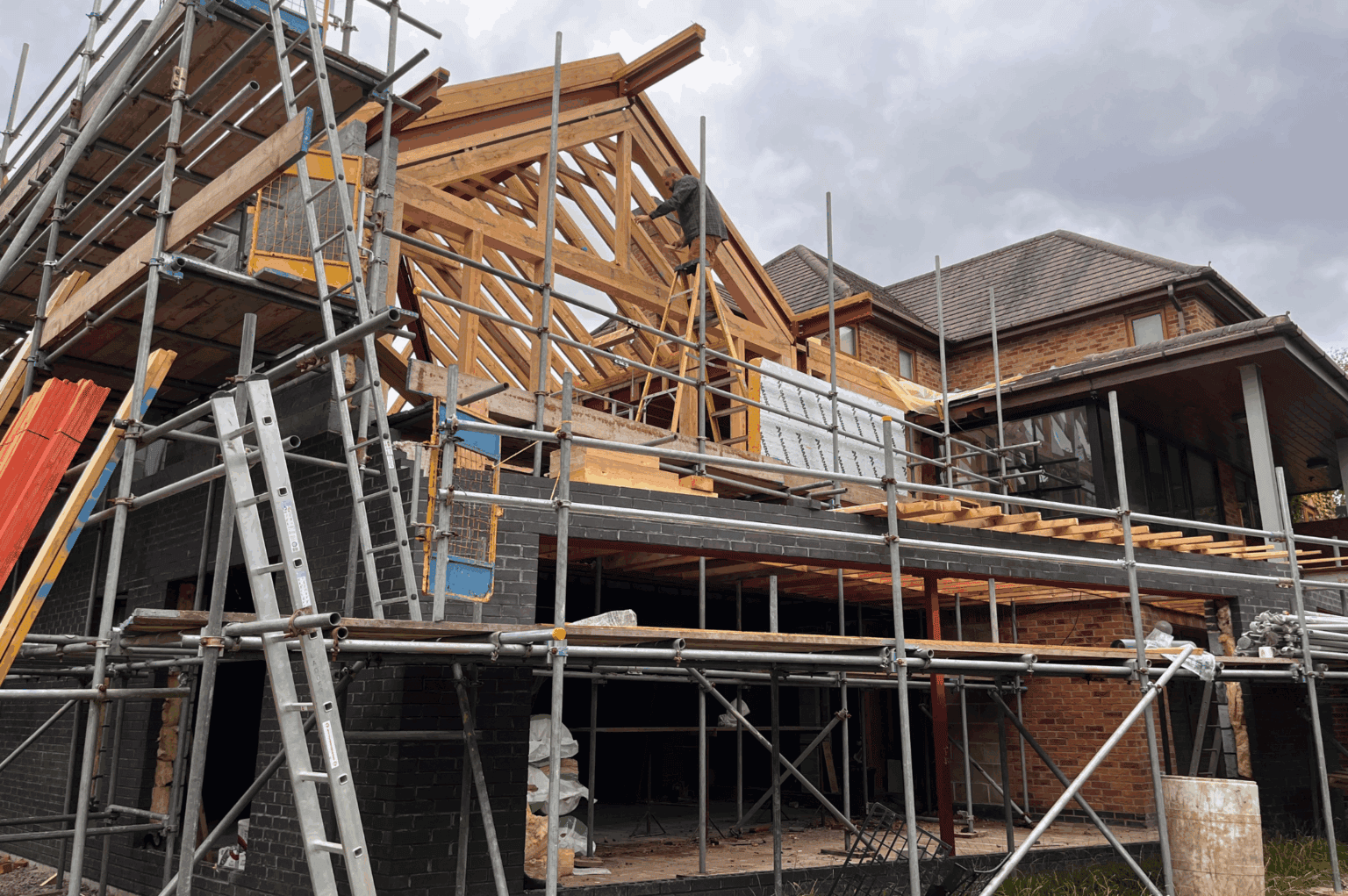
After establishing an extension is the right thing for your home, the next critical thing to consider is whether the changes you are exploring will require planning permission. Understanding what permissions are required is critical to avoiding wasted time and money on unnecessary applications as well as avoiding costly mistakes that could lead to neighbour disputes or even enforcement action from the council.
This article focuses on the rules, routes and risks of planning for extensions and remodels.
Permitted Development Rights
Most domestic homes benefit from permitted development (PD) rights, with some key exceptions (i.e. apartments do not benefit from PD).
Some homes will have limited permitted development rights due to heritage constraints. For example, Listed Buildings benefit from limited PD rights, but in almost all cases Listed Building Consent will be required even if Planning Consent is not required. Homes within conservation areas, Areas of Outstanding National Beauty, National Parks, and World Heritage Sites also benefit from limited PD rights in terms of the types of changes that can be made.
Other homes may have had PD rights removed as part of a previous planning application. This is particularly common with barn conversions and some new build developments. The removal of PD rights means that any development that would have been considered permitted development will require a planning application to be submitted to the local authority.
Finally, homes affected by Article 4 Directions may also have limited permitted development rights. These directions can be put in place over specific geographic areas and can limit things such as the replacement of windows meaning planning applications are required where they generally wouldn’t be.
The first step to any domestic extension or remodel project is to establish the situation in relation to permitted development rights for the specific home.
The permitted development rights for householders: technical guidance document is the bible for all permitted development changes to the home. The government document includes a full breakdown of the permitted development rights relating to domestic homes. The main sections are as follows, and are generally self-explanatory in the areas they cover;
Class A – enlargement, improvement or alteration
Class B – additions etc. to the roof
Class C – other alterations to the roof
Class D – porches
Cless E- buildings etc.
The following sections are more minor, and generally less relevant to an architectural project;
Class F – hard sources
Class G – chimney, flues etc.
Class H -microwave antenna
Permitted development rights for householders: technical guidance – GOV.UK
The key thing to understand from the permitted development technical guidance is that is a significant amount of work that can be carried out to a home – without the need for a planning application.
Taking a typical detached domestic dwelling, not listed, not in a conservation area or any other designated site or in an area covered by an Article 4 direction with intact permitted development rights – the opportunities are significant.
Subject to meeting the specific requirements of the technical guidance, without permission this dwelling could benefit from;
- Single storey extension to the rear up to 4m deep (8m if accompanied by a Prior Approval Notification Application)
- Single storey extension to both sides, up to half the width of the original dwelling
- Two storey rear extension up to 3m deep
- A loft conversion including the construction of a flat roof dormer
- Porch extension to the front
- New single storey outbuildings covering up to 50% of the size of the plot (generally restricted to the rear of the plot
All the above can combine to add a significant amount of additional space to any dwelling. One key thing to remember when considering any permitted development changes is that typically materials are restricted to those that ‘match the existing’ – so if you have any plans to add more contemporary cladding or render when the existing home is made from this isn’t possible. In most cases, whilst permission isn’t required we would also still recommend that a Certificate of Lawfulness application is submitted before any development starts – to ensure you have a paper trail for your plans and stay on the right side of the regulations.
PD changes will not always be appropriate for your plans. The changes can be restrictive when it comes to external changes and changes to the front or ‘principal’ elevation. With this in mind, if you are looking to improve the kerb appeal of your home – PD changes won’t usually be the way to achieve this.
However, if you are looking to add space with minimal cost and complexity – this could be the way to go.


Extensions and Householder Planning Applications
Any changes not covered by PD rights can be achieved with the submission of a Householder Planning Application. These are more straightforward than most full planning applications and can include a much wider ranges of potential changes to the home including;
- Changes to external materials
- Two storey side extensions
- Front extensions
- Changes to the roof
- Outbuildings forward of the ‘principal’ elevation
Whilst PD changes are quite formulaic and logical to understand and argue with the planners – a householder planning application is a more nuanced process. Planning officers will assess any potential extension in much more detail with a number of key areas to think about.
Impact on neighbours – Will the proposed extension overshadow a neighbour’s garden? Will the extension create windows that overlook any neighbours?Will the extension create an overbearing impact on any neighbours or block their views?
Impact on the street scene/ reflecting the character of the area – Will the proposed extension or changes fit in with the style and character of the street? Are extensions common in the area or will this be the first? Does the scale of the extension fit in with the scale of other dwellings in the area?
Impact on the existing dwelling – Planners like to use the word ‘subservient’ when it comes to extensions i.e. do any extensions step down in height, in relation to the existing home? Does the front elevation of the extension step back, from the front elevation of the home?
All these areas will need to be considered in relation to your proposals to put the best case forward to the planners.
Our job as architects at this stage of the design process is to take the high level concept designs we might have developed to the next level of detail including detailed floor plans and elevations and often more detailed external 3D visuals. As well as using these drawings to help you understand how your project will work for you and look in reality – we also use these as tools to convince the planners and your neighbours that the proposals are acceptable in planning terms.
The planning stage can be fraught with complexity – it is at this stage that our ability as architects at PDP to collaborate with our in-house planning consultants becomes our superpower. Working together with our experienced team, we can ensure we bring your vision together in the best way whilst maximising the potential of achieving a positive approval – even in the most complex situations.
If you’re thinking about a home extension project – get in touch with our team at enquiries@planningdesign.co.uk or call us on 01332 347 371.
Also, look out for next month’s Home Extensions article all about the technical design stage of your project. Sign up to our newsletter to ensure you don’t miss out!

