
This is the final one in our trilogy of articles on the plan making process. We have already covered how the Local Plan process works and how landowners can ‘throw their hat in the ring’ to put land forward for development. In this third edition we will conclude with our top tips on Local Plan promotion and what to do if you do not get the result you are looking for.
Top tips for promoting your land for Local Plan allocation:
- Get involved early on – the sooner you start to promote your site (typically through the Call for Sites process or through the Regulation 18 consultation), the sooner you will get the site on the council’s radar as a site that is being actively promoted for development. For private landowners, this may also lead to an approach from a developer or landowner who sees that your site is available and wants to take it on themselves.
- Address any key technical weaknesses – this includes issues raised by the council, consultees and members of the public. Having engaged in the process early, the council’s Strategic Housing and Economic Land Availability Assessment (SHELAA) will provide a summary of your site and identify any potential concerns. Maybe the access appears a bit dodgy? Or perhaps there is a concern about the impact on the setting of that Grade II listed church? Now is the time to address those concerns by getting the necessary technical reports done to demonstrate deliverability and sustainability, making your site more attractive to the Council and, ultimately, the Planning Inspector. Remember, for the council to allocate a site in the Local Plan, officers have to be able to demonstrate that they have ‘done their due diligence’ on the site and that there is a confidence that it will come forward for development.
- Respond to consultations – Keep promoting your site and respond to consultations at every stage. Never feel that you cannot or do not need to influence process. Whether your site is in or out of favour, you must continue to promote the site as the Local Plan process is a bit like a beauty contest where competing sites are naturally compared to one another and they can’t all be winners. Remember, also, that in order to appear at the Examination in Public (EiP), you normally have to respond to the Council’s Regulation 19 stage (the Publication Draft consultation). This is where you are asked to comment on the submission version of the Local Plan and any comments must address whether the plan is positively prepared, justified, effective and consistent with national policy. It is also worth making it clear that you wish to appear at the Examination.
- Attend the Examination in Public (EiP) – this gives you an opportunity to show the Local Plan inspector that the site is available and to directly answer any questions which might arise about the deliverability of the site. Hopefully, you and the council will be on the same side (i.e. you are both wanting the site to be allocated). If selected, you’ll be invited to attend topic-based hearing sessions in the form of structured discussions led by the Inspector, not adversarial cross-examination type situations.

A site between Matlock and Darley Dale – a successful application based on the lack of a 5 year housing land supply
When to make a speculative application
Sometimes, despite all best endeavours, promotion will not be successful at achieving a site allocation in the Local Plan. If you have a ‘good site’ that is sustainably located and you have addressed (or feel that you can address) all relevant technical issues, then it is not uncommon for landowners or developers to submit what’s often called a ‘speculative application’ if there is a clear need for the type of development proposed. In a housing context, this is most easily demonstrated where the council cannot demonstrate a five-year housing land supply, meaning the “presumption in favour of sustainable development” applies, making it easier for developers to achieve planning permission even on sites not allocated in the Local Plan. However, five-year housing land supplies are ‘moving feasts’ for a number of reasons. They must be updated by local planning authorities every year but can also be affected part way through a year by changes in national policies (as has happened often in recent years where the method for calculating housing need has regularly shifted), completion rates, other grants of planning permission and market dynamics (e.g. Land availability, developer interest, and infrastructure constraints all affect whether sites are considered “deliverable” at any given time).

It is therefore important to be aware of these dynamics in a local and national context and time the application right – if it is submitted too late the council may have adopted their plan (at which point the need for the development will have fallen away) or other factors may have intervened.
From a landowner perspective, the same principles apply where landowners are looking to promote a site for commercial/employment development. Councils are expected to plan positively for employment needs through their Local Plans (through what is known as an Employment Land Review (ELR)) but councils do not need to demonstrate a ‘five-year employment land supply’ like they do for housing so it can be harder to gain planning permission on sites not allocated in the Local Plan.
At PDP, we are vastly experienced in the promotion of housing and employment sites for Local Plan allocation and in the preparation of planning applications for major residential development. If you would like a discussion about this topic please contact us via email at enquiries@planningdesign.co.uk or call 01332 347371.
Richard Pigott, Director, Chartered Town Planner, Planning & Design Practice Ltd


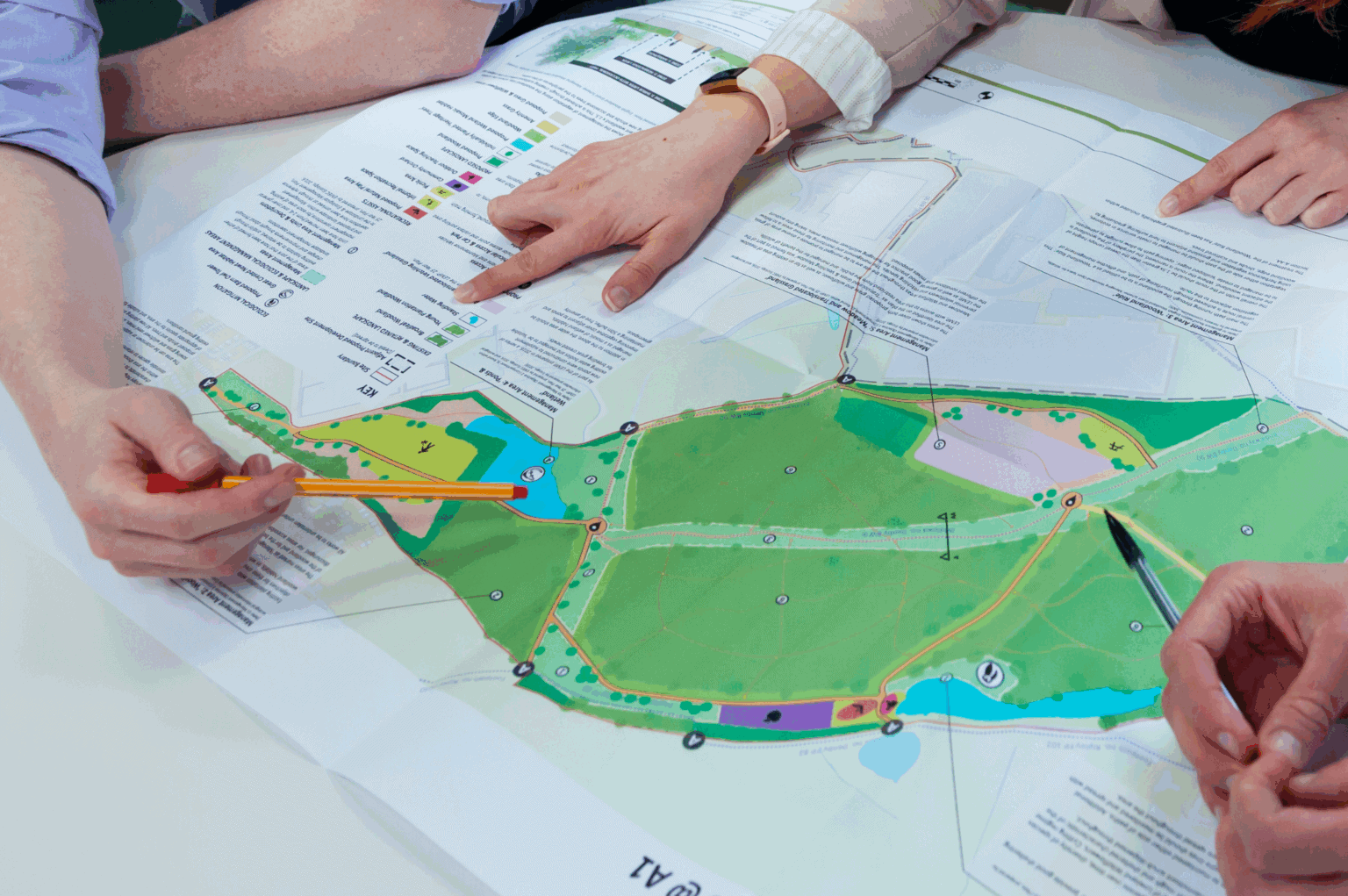
Images from Ashbourne Airfield, our largest ever Local Plan allocation and the largest single development ever approved in Derbyshire Dales.