
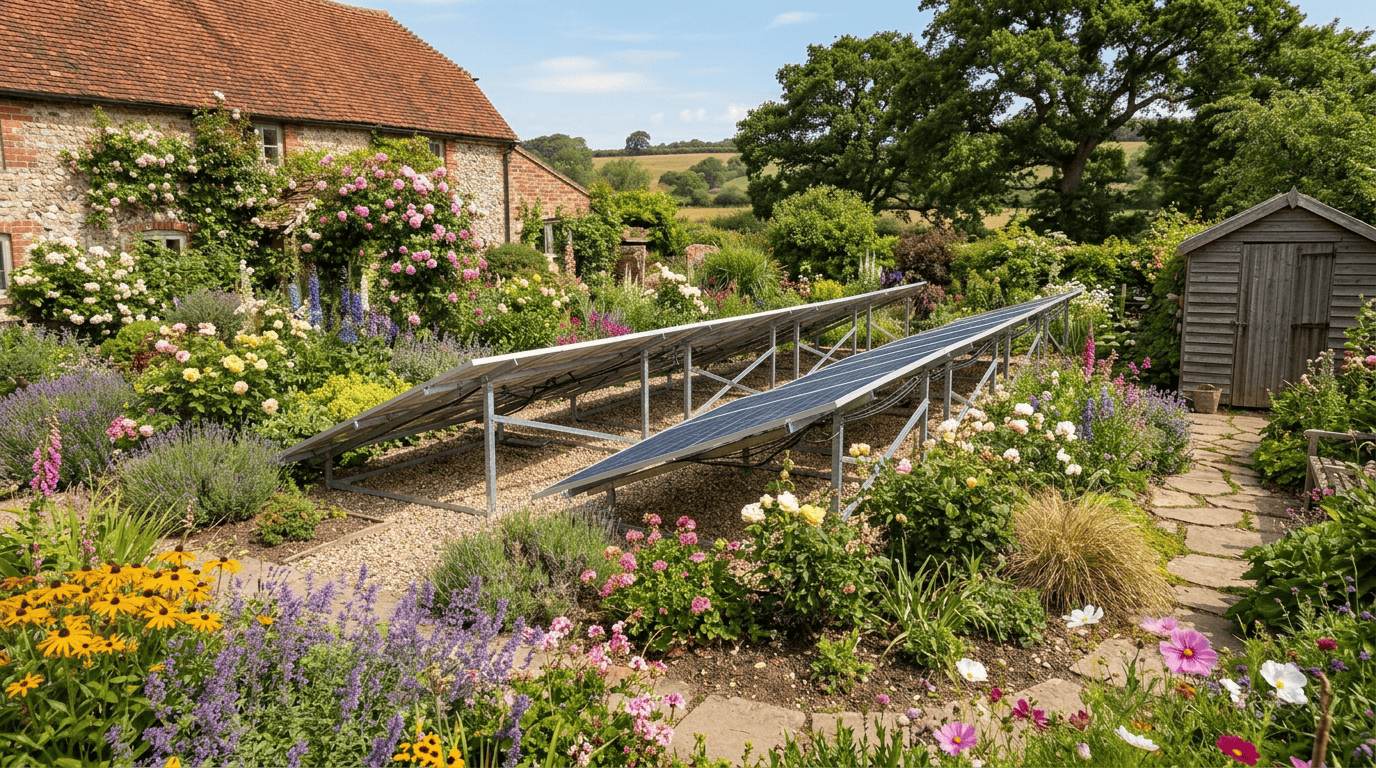
The 2026 amendment significantly updates permitted development rights for domestic solar installations in England, making it easier to implement solar technology while introducing clearer safeguards for heritage assets, conservation areas, listed buildings, and fire safety considerations.
The changes come into force on 27 August 2026.
What Has Changed?
1. Clearer Rules for Houses and Blocks of Flats
The regulations now distinguish between:
- Dwellinghouses
- Blocks of flats
Rather than applying a broad set of restrictions, the Order establishes separate limitations for each building type, providing greater clarity for applicants, local authorities and consultants.
2. Recognition of “Plug-In Solar”
One of the most notable changes is the formal introduction of plug-in solar PV systems into planning legislation.
The Order defines plug-in solar as photovoltaic systems connected to a domestic electrical installation through a standard plug and socket, reflecting the growing availability of balcony-mounted and small-scale modular solar technologies.
3. New Restrictions Relating to Timber-Clad Buildings
The legislation prevents plug-in solar installations from being attached to:
- Wooden walls
- Timber-clad external surfaces
- Wooden balconies and enclosures
- Wooden fences, gates and similar structures
These restrictions are imposed to address safety and risk concerns associated with certain mounting locations.
4. Continued Protection for Heritage Assets
The amendments maintain strong protections for designated heritage assets.
Solar installations remain restricted on:
- Listed buildings
- Buildings within the curtilage of listed buildings
- Scheduled monuments
Additional controls continue to apply within conservation areas and World Heritage Sites.
5. Prior Approval Requirements Expanded
For some stand-alone solar installations located:
- On Article 2(3) land, and
- Within 5 metres of a boundary,
developers must seek prior approval from the local planning authority regarding visual impacts.
6. Transitional Arrangements
Where solar development was permitted before the new Order but would no longer qualify after the amendments, developers have a one-year grace period until 26 August 2027 to implement previously permitted schemes.
Why This Matters for Heritage and Planning Professionals
This amendment reflects the Government’s continuing effort to balance:
- Net-zero ambitions
- Expansion of domestic renewable energy
- Protection of the historic environment
- Amenity and design considerations
For heritage consultants, the changes are particularly noteworthy because they preserve restrictions affecting listed buildings, scheduled monuments and conservation areas while facilitating wider adoption of domestic solar technology elsewhere.
The introduction of plug-in solar is also significant. It demonstrates how planning legislation is beginning to respond to emerging technologies and changing patterns of domestic energy generation.